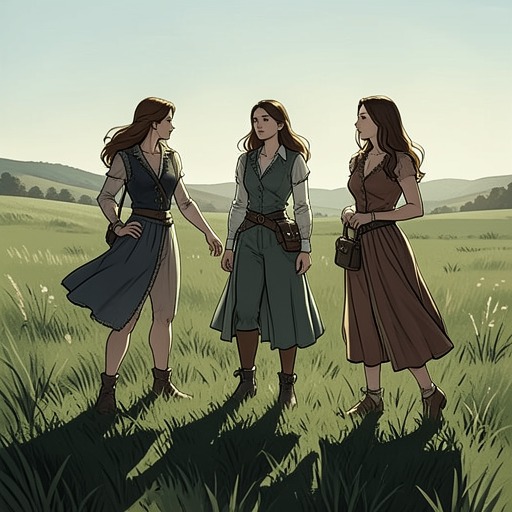
A promise was law; a promise was currency; a promise was your bond
A Court of Thorns and Roses“A promise was law; a promise was currency; a promise was your bond” is an expression of obligation that gives a spoken vow the force of law, the exchange value of currency, and the personal weight of a bond. It defines how Feyre Archeron understands duty in the Mortal Realm and helps explain the larger narrative’s recurring structure of bargains, repayment, protection, and consequence.
Meaning and Form
The expression is deliberately threefold. Calling a promise “law” makes it binding; calling it “currency” presents it as something that can be exchanged, repaid, or used to establish credit; calling it “your bond” makes the obligation inseparable from personal identity. Its parallel structure turns an abstract moral belief into a compact social code. A promise is not merely an intention about the future but an active force that governs conduct in the present.
The wording also joins public and private meanings. Law belongs to a community’s rules, currency belongs to its economy, and a bond belongs to intimate loyalty. Together, they establish a world in which trust is simultaneously legal, material, and emotional. The expression therefore prepares the reader to understand later bargains not as casual agreements but as relationships in which every gift or pledge may create an enduring debt.
Feyre Archeron and Her Mother’s Vow
The expression first becomes decisive through the vow Feyre Archeron made to her dying mother. Nothing remains of her mother in the family cottage beyond an ironwood bed and that promise. Eleven years later, whenever Feyre Archeron looks toward the horizon or considers walking away from her family, she hears the request to stay together and look after them. Her continuing responsibility for Nesta Archeron, Elain Archeron, and their father is thus rooted in a promise made when she was too young to understand why the burden had been placed on her rather than on her elder sisters or her father.
The vow is not presented as uncomplicated virtue. Feyre Archeron sometimes hates her mother for asking it, wondering whether fever had impaired her judgment or whether approaching death had instead given her a painful clarity about the family’s true nature. That ambivalence gives the expression its emotional force: a promise can be sacred while also being experienced as coercive. Because Feyre Archeron believes that a promise is law, currency, and bond, she continues to pay for a decision made by a child, even when honoring it costs her freedom and happiness.
Her family’s collapse makes the vow material rather than symbolic. In the impoverished cottage, where food is scarce and the family depends on what Feyre Archeron can provide, the promise becomes labor, sacrifice, and vigilance. Her sisters spend the money she gives them, while she remains responsible for hunting and household survival. Even acts of limited reciprocity—such as Nesta Archeron chopping more wood without being asked or Elain Archeron bringing home a new chisel for their father’s carving—occur within the strained economy created by Feyre Archeron’s original obligation.
Promises as Exchange and Debt
The expression’s meaning is reinforced when the mercenary explains why she gives Feyre Archeron the pelts. Someone had once done the same for the mercenary and her family when they needed help, so she regards the gift as repayment of what is owed. The exchange is not based on immediate payment: the mercenary passes on useful pelts because an earlier act of assistance has created a debt that must eventually circulate onward. This presents promise and obligation as a social economy extending beyond the immediate participants.
Feyre Archeron’s relationship with Isaac Hale shows the same principle in a more intimate and practical form. Their dealings are discreet, but she insists on conditions that protect her from pregnancy, and Isaac Hale takes the contraceptive brew himself because he knows she would otherwise refuse him. Afterward, Feyre Archeron gives Elain Archeron a twenty-mark copper and returns to the family’s needs. The scene places bodily autonomy, money, and responsibility in the same chain of exchange: Feyre Archeron controls the terms of the relationship, pays what she can, and continues to treat every resource as something accountable to the household.
The phrase also governs the bargain offered by Rhysand. After Feyre Archeron is injured, Rhysand proposes to heal her arm in exchange for two weeks of every month at the Night Court, beginning after the three trials. His healing is therefore not a gift without conditions but an exchange that binds future time and movement. Feyre Archeron immediately rejects it because she has already made one foolish bargain, recognizing that aid can carry a price even when it arrives in the form of rescue.
Protection, Consent, and the Cost of Promises
Tamlin’s alteration of Feyre Archeron’s family memories presents another form of obligation disguised as protection. He tells Feyre Archeron that her family believes a wealthy, long-lost aunt called her away to help on her deathbed; they know she is alive and cared for, and they are prepared to flee if signs appear that the Wall is failing. Tamlin explains that he glamoured their memories because he feared Feyre Archeron’s father might pursue her or persuade villagers to cross the Wall and violate the Treaty.
The act exposes a tension within the expression. A promise can preserve safety, but it can also authorize another person to act without consent. Tamlin’s intention is protective, yet Feyre Archeron experiences the alteration as a violation because it changes her family’s understanding of reality. The value of protection therefore shifts into a question of control: the promise to keep someone safe may become a justification for deciding what they are allowed to know.
The same tension appears when Feyre Archeron follows the beast into the woods. Her father’s farewell tells her to go somewhere new and make a name for herself, but the beast represents a life taken in payment for another life. Feyre Archeron recognizes that the offered life may mean losing the three people her mother charged her to protect. The thought steels and anchors her, because her conflicting obligations leave no harmless choice: honoring the supernatural debt threatens the family vow, while resisting it may endanger everyone.
Promises and the Structure of Power
At the conclusion, promises operate on a larger political scale. When Feyre Archeron is near death, the High Lord of the Autumn Court releases a glittering spark onto her, followed by similar gifts from the High Lord of the Summer Court and the High Lord of the Winter Court. Tamlin bows his head in gratitude as the High Lords contribute to the act that will restore her. The scene transforms the language of debt into collective intervention: power is transferred through a sequence of deliberate offerings, and survival becomes connected to obligations among the courts.
Across these episodes, the expression supplies a moral grammar for the novel’s world. Vows hold families together, gifts create reciprocal debts, healing can purchase access to another person’s life, and protection can become a claim over memory and choice. Its significance lies in refusing to separate ethics from exchange. To promise is to bind the self, but the resulting bond may sustain, imprison, protect, or demand repayment. Feyre Archeron’s story repeatedly asks whether a commitment remains honorable when it was made under unequal conditions—and whether freedom consists in escaping promises or choosing which obligations are truly one’s own.